The Call You Never Knew You Missed
Why the most expensive part of a missed call is the one that never shows up in your data.
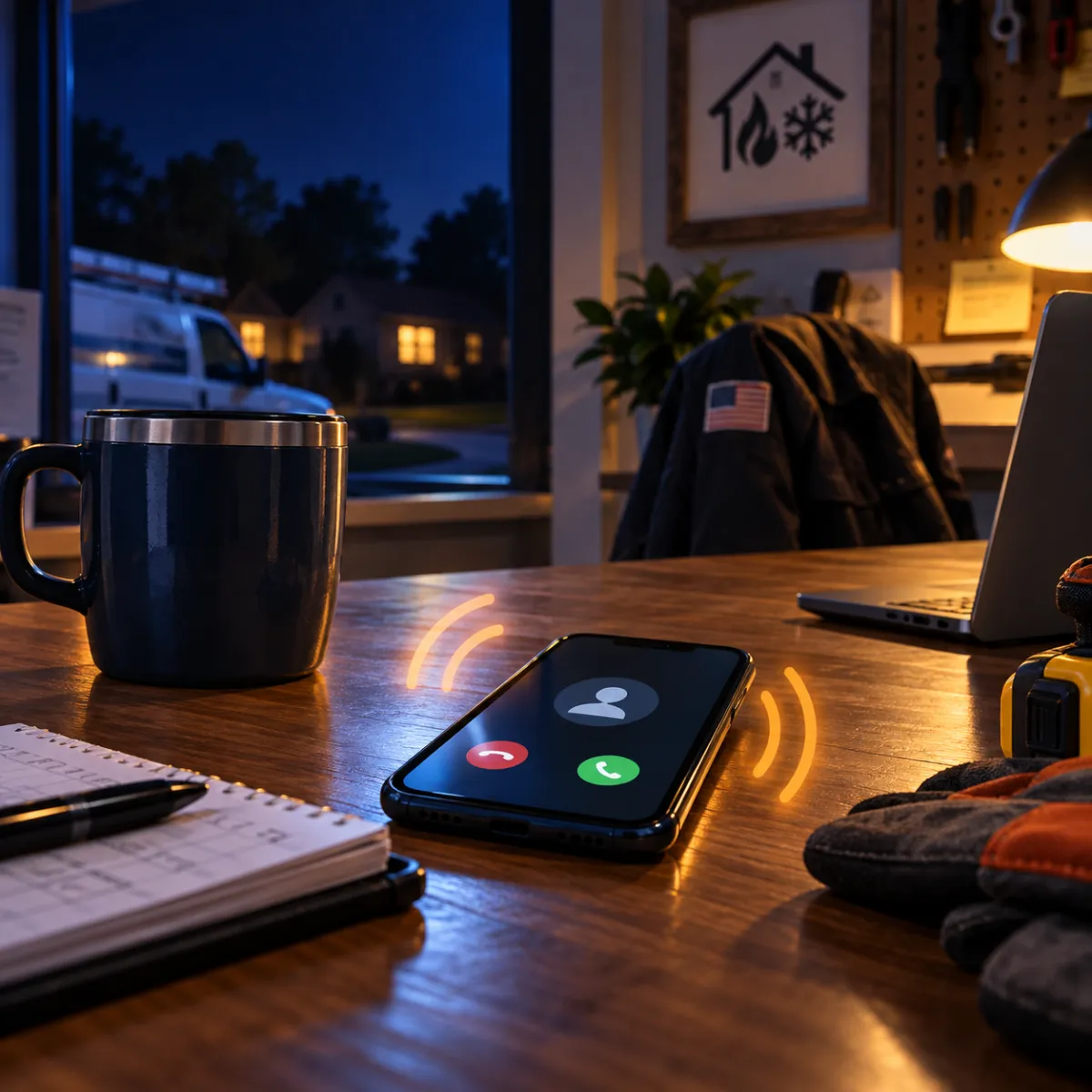
A homeowner's furnace stops working at 6:30 PM on a Tuesday. She pulls up three HVAC companies and starts calling down the list. The first rings six times and goes to voicemail. She doesn't leave a message — she calls the second.
That moment never appears anywhere in the first company's systems. No missed-call log entry. No lost-lead report. No line item on a P&L. As far as their data is concerned, that Tuesday looked completely normal. That's what makes this particular revenue leak different from almost every other one in the business: it's invisible by design.
The Size of the Problem
Invoca's 2026 benchmark of home services calls found that a person answered just 52% of all inbound calls, and 65% of calls lasting longer than 15 seconds, which leaves out misdials and quick hang-ups. That's roughly one real call in three that never reaches a person. For a shop fielding 200 real calls a week, that's around 70 calls a week. These are averages across Invoca's customers, so your own number could be better or worse.
Evenings and weekends are the hardest hours to cover, because that's when staffing is thinnest. During a heat wave or a hard freeze, calls surge right as every technician is already out on a job.
Why the Loss Compounds
The immediate dollar loss is real enough on its own. A routine repair call is worth hundreds of dollars, and an emergency or a system replacement can be worth thousands. But what matters more is what happens after the call goes unanswered.
Here's what the data says about those callers. In a 2025 CallRail survey of 1,000 U.S. consumers, 42% said they leave a voicemail when a business doesn't answer, and 21% said they immediately call another business. Invoca's platform data tells a harsher story: fewer than 3% of callers sent to voicemail actually leave a message. Either way, the business that missed the call often never finds out a customer existed.
That single missed call isn't just one lost job. It's the maintenance visits that customer would have booked annually, the eventual system replacement years down the line, and the referrals they'd have sent to neighbors who trusted their recommendation. A residential HVAC customer who stays with one contractor for the life of their equipment can be worth thousands of dollars over that relationship — all of it forfeited in the ten seconds it took someone to hang up and dial a competitor.
Where This Sits Outside What Your FSM Was Built to Do
This isn't a criticism of Jobber, Housecall Pro, ServiceTitan, or any other platform running your dispatch and scheduling. Those systems are excellent at what they're designed for: managing a job once it exists — scheduling the technician, tracking the invoice, keeping service history organized and searchable. The gap sits one step earlier. Out of the box, an FSM logs jobs that got booked. Unless you've added a phone or AI-answering feature, it has no record of the call that rang out, because from the system's perspective, nothing happened. Even where those features exist, they cover the phone. They don't follow up on the estimate that went quiet or the lead that went cold. That's a structural gap, not a flaw in the software.
The Part Most Contractors Never Calculate
Here's the exercise worth actually doing, rather than estimating: pull your call logs for one week — not the calls that got booked, all of them — and count how many rang through to voicemail or went unanswered outside business hours. Multiply that number by your average ticket value and your typical close rate.
Most owners who run that calculation for the first time are surprised. Not because the industry averages are wrong, but because it's easy to assume "we're pretty good about answering the phone" when nobody's actually been counting.
The reason this gap persists industry-wide isn't a lack of concern. It's that answering every call, every time — including at 9pm on a Saturday when the whole crew is off the clock — requires a level of coverage that's expensive and difficult to staff consistently with people. A missed call at 2pm on a Tuesday and a missed call at 11pm on a Sunday are the same lost revenue, but only one of them is easy to prevent with a receptionist working a normal schedule.
What This Costs to Leave Alone
Unlike an unpaid invoice or a cold estimate, a missed call doesn't sit somewhere waiting to be followed up on. There's no record to revisit next week unless something captures it. The homeowner is already calling the next name on the list, and by the time anyone notices the miss rate is high, months of calls like that one have come and gone.
That's what makes this pillar different from the others in a revenue recovery conversation. Cold estimates and dead leads can be worked back into the pipeline days or weeks later. A missed call gives you a short window, often just minutes. A fast text back to the caller can win some of them, and every minute after that makes it less likely. Once the job goes to a competitor, it generally can't be undone, so the real work is closing the gap before the next one.
The Real Question Right Now
If you pulled your call logs for the last seven days, how many calls came in outside business hours — and how many of those actually got answered live?
Most contractors have never looked at that number specifically, because nothing in a typical FSM surfaces it. It's worth finding out, not to feel bad about the current miss rate, but because the fix here tends to be more straightforward than most of the other revenue gaps in the business — once the size of it is actually visible.
If you want a second set of eyes on how many calls are slipping through and what that's actually costing you, the Revenue Diagnosis takes about 15 minutes and shows you exactly where estimates, dead leads, and follow-up gaps are sitting in your pipeline right now — no pitch, just the numbers.
A missed call is one of five places revenue leaks out of a home service business. See how a Revenue Diagnosis works to put a number on yours, or read about the full revenue recovery system.
Get your free Revenue Diagnosis → https://calendly.com/vince-odn/discovery-call